

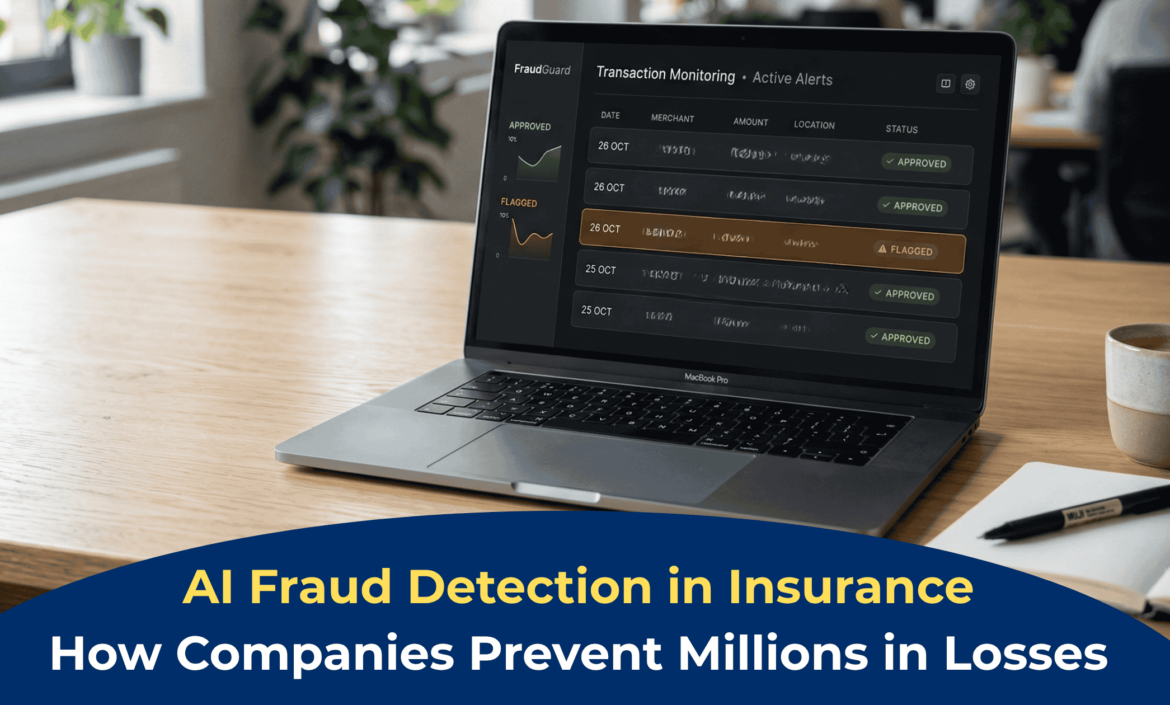
AI Fraud Detection in Insurance is becoming essential as fraud continues to rise. In fact, insurance fraud accounts for nearly 10% of total claims costs globally, making it one of the biggest challenges for insurers today. From inflated claims to identity manipulation, fraud costs insurers billions every year. And the real challenge? Most fraudulent activities are designed to look like legitimate claims.
That’s where AI-powered fraud detection is changing the game.
Instead of relying on manual reviews and outdated rule-based systems, insurers are now using AI to detect patterns, flag suspicious activity in real time, and stop fraud before it escalates.
Let’s break down how it works, and how insurers are using it to prevent massive losses.
Why Traditional Fraud Detection Falls Short
For years, insurers depended on manual audits and rule-based systems, but today’s fraud tactics have outgrown these methods.
Here’s the problem with traditional approaches:
- Static rules can’t adapt to new fraud patterns
- Manual reviews slow down claim processing
- High false positives frustrate genuine customers
- Delayed detection leads to higher financial losses
Fraudsters today use sophisticated methods, fake identities, coordinated claims, and digital manipulation. Static systems simply can’t keep up.
What Makes AI Fraud Detection Different?
AI doesn’t just follow rules, it learns from data.
Modern AI systems analyze thousands of data points across claims, policies, and customer behavior to identify anomalies that humans would miss.
Key capabilities include:
1. Pattern Recognition at Scale
AI can detect unusual claim patterns across millions of records, something impossible with manual analysis.
2. Real-Time Risk Scoring
Every claim is evaluated instantly, assigning a fraud risk score based on behavior, history, and context.
3. Behavioral Analysis
AI studies how customers interact, flagging inconsistencies in filing patterns, timing, or documentation.
4. Continuous Learning
The system improves over time by learning from new fraud cases and outcomes.
Common Types of Insurance Fraud AI Can Detect
AI systems are particularly effective at identifying these high-risk fraud scenarios:
1. Duplicate Claims
Submitting the same claim across multiple insurers or policies.
2. Inflated Claims
Exaggerating damages or medical expenses beyond actual loss.
3. Identity Fraud
Using stolen or synthetic identities to file claims.
4. Staged Incidents
Deliberately creating accidents or damages for payouts.
5. Provider Fraud
Collusion between claimants and service providers (e.g., repair shops or medical professionals).
AI doesn’t just detect these individually, it connects the dots across cases, revealing hidden fraud networks.
How AI Detects Fraud: Behind the Scenes
Here’s a simple breakdown of how AI works behind the scenes:
Step 1: Data Aggregation
AI pulls data from multiple sources:
- Claims history
- Customer profiles
- Third-party databases
- Transaction records
Step 2: Feature Analysis
It evaluates hundreds of variables such as:
- Claim frequency
- Claim timing
- Geographic inconsistencies
- Documentation patterns
Step 3: Machine Learning Models
Algorithms analyze patterns and compare them with known fraud indicators.
Step 4: Risk Scoring & Alerts
Each claim gets a fraud probability score. High-risk claims are flagged for further investigation.
Step 5: Feedback Loop
Investigators’ decisions are fed back into the system to improve accuracy over time.
Real Impact: How Insurers Are Saving Millions
AI-driven fraud detection isn’t theoretical; it’s delivering measurable results.
Faster Claim Processing
Low-risk claims are approved instantly, reducing processing time and improving customer satisfaction.
Reduced False Positives
AI minimizes unnecessary investigations, allowing teams to focus on real threats.
Early Fraud Detection
Suspicious activity is flagged before payouts are made, preventing losses rather than reacting to them.
Operational Efficiency
Automation reduces dependency on manual audits, lowering operational costs.
Challenges Insurers Face When Adopting AI
While the benefits are clear, implementation isn’t always straightforward.
Data Silos
Disconnected systems make it hard to get a unified view of customer data.
Integration Complexity
Legacy systems often don’t support modern AI tools.
Model Accuracy Concerns
Poorly trained models can lead to incorrect fraud detection.
Compliance & Regulations
Handling sensitive customer data requires strict adherence to regulatory standards.
This is where having the right technology partner becomes critical.
Best Practices for Implementing AI Fraud Detection
To get the most out of AI, insurers should follow a structured approach:
1. Start with Clean, Unified Data
Ensure data from all systems is integrated and standardized.
2. Use Hybrid Models
Combine AI with rule-based systems for better accuracy and control.
3. Focus on Explainability
Ensure AI decisions can be interpreted, important for compliance and trust.
4. Continuously Train Models
Regular updates improve detection accuracy and reduce false positives.
5. Align with Business Workflows
AI should integrate seamlessly into claims processing, not disrupt it.
The Future of Fraud Detection in Insurance
AI is evolving rapidly, and its role in fraud detection will only expand.
Emerging trends include:
- Predictive fraud prevention (stopping fraud before it happens)
- Network analysis to uncover fraud rings
- AI-powered document verification
- Voice and image analysis for claims validation
The future isn’t just about detecting fraud; it’s about preventing it entirely.
How Athena Helps Insurers Stay Ahead of Fraud
Implementing AI isn’t just about technology, it’s about execution. That’s where Athena comes in.
Athena helps insurance companies build scalable, intelligent fraud detection systems that actually deliver results.
Here’s how Athena makes a difference:
1. Seamless Data Integration
Athena connects fragmented systems to create a unified data ecosystem, critical for accurate AI analysis.
2. Custom AI Models
No one -size-fits-all approach. Athena builds tailored models aligned with your business workflows and fraud risks
3. Real-Time Detection Systems
Identify and stop suspicious claims instantly, before payouts happen.
4. Workflow Automation
Reduce manual effort with automated alerts, case management, and investigation workflows.
5. Compliance-Ready Solution
Built with security and regulatory standards in mind, ensuring safe data handling.
Fraud in insurance isn’t going away, but the way companies handle it is evolving fast.
AI is no longer optional. It’s a competitive advantage.
Insurers that invest in intelligent fraud detection today are not just preventing losses, they’re improving customer trust, speeding up operations, and building future-ready systems.
Frequently Asked Questions About AI Fraud Detection in Insurance
1. How does AI actually detect fraud in insurance claims?
AI looks for patterns that don’t match normal behavior. It analyzes past claims, customer activity, and transaction data to flag anything unusual. Instead of relying on fixed rules, it learns over time, so it gets better at spotting fraud the more data it processes.
2. Is AI fraud detection better than traditional rule-based systems?
Yes—mainly because it adapts. Rule-based systems only catch what they’re programmed for, but AI can identify new and evolving fraud patterns. It also reduces false alarms, so teams spend less time reviewing genuine claims.
3. What kind of data is needed for AI fraud detection?
AI works best when it has access to diverse and clean data. This includes claims history, customer profiles, transaction records, and even third-party data. The more connected and structured your data is, the more accurate the fraud detection becomes.
4. Can AI reduce false positives in fraud detection?
Absolutely. One of the biggest advantages of AI is its ability to differentiate between genuine and suspicious behavior more accurately. This means fewer legitimate claims get flagged, leading to faster approvals and better customer experience.
5. How difficult is it to implement AI fraud detection in existing systems?
It all depends on your current setup. If your setup is old and outdated, then it might take time to integrate AI into your system. However, with a proper technology partner, AI can be incorporated into your system without much disruption and can begin to yield results for your organization.
Ready to Reduce Fraud Losses?
If your team is still relying on manual reviews or outdated systems, it’s time to rethink your approach.
Athena can help you build a smarter, faster, and more accurate fraud detection system, tailored to your business.
See how Athena can help you reduce fraud losses by up to 30%, book a quick demo today.


