

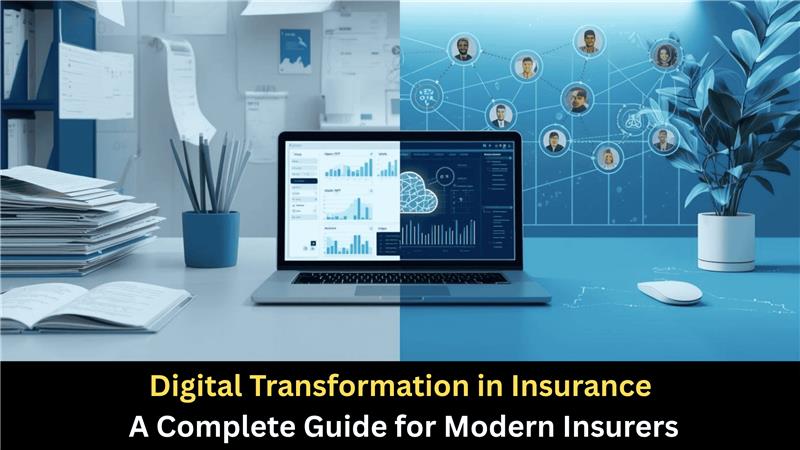
Why Insurance is Under Pressure to Transform
Digital transformation in insurance is no longer optional—the industry is currently at a crossroads.
Changing customer demands, stiff competition, and outdated infrastructure have forced insurance companies to rethink how they operate. Traditional methods are no longer sufficient to meet modern expectations.
This is why digitalization within the insurance industry has become essential for survival and growth.
What is Digital Transformation in Insurance?
Digital transformation in insurance involves the implementation of digital technology into all processes of insurance
This includes:
- Automating workflows
- Modernizing legacy systems
- Leveraging data for decision-making
- Enhancing customer experience
It’s not just about technology—it’s about improving how insurance businesses operate and deliver value.
Why Insurance Companies Need Digital Transformation
Legacy Systems Are Slowing Growth
Many insurers still rely on outdated systems that are expensive to maintain and difficult to scale.
Increasing Operational Costs
Manual processes increase dependency on large teams, raising costs significantly.
Rising Customer Expectations
Customers now expect fast, digital-first experiences—similar to banking and e-commerce.
Competitive Pressure
InsurTech startups are leveraging AI and automation to disrupt traditional insurers.
Key Technologies Driving Digital Transformation
AI in Insurance Industry
AI is transforming underwriting, claims processing, and fraud detection by enabling faster and more accurate decision-making.
👉 Interlink: Link AI in insurance to your pillar blog
Automation and Workflow Optimization
Automation reduces manual tasks and improves operational efficiency across departments.
Data Analytics
Insurers can use data analytics to predict risks, personalize policies, and improve decision-making.
Cloud and Integration
Cloud platforms enable scalability, flexibility, and seamless integration with modern tools.
Benefits of Digital Transformation in Insurance
- Reduced operational costs
- Faster claims processing
- Improved accuracy and compliance
- Enhanced customer experience
- Better scalability
These benefits directly impact profitability and long-term growth.
How to Implement Digital Transformation
Step 1: Identify Business Challenges
Understand where inefficiencies exist—claims, underwriting, or customer service.
Step 2: Define Clear Goals
Set measurable objectives such as cost reduction, faster processing, or improved customer experience.
Step 3: Start Small
Focus on high-impact areas like claims automation or fraud detection.
Step 4: Scale Gradually
Expand transformation initiatives based on ROI and business outcomes.
Common Challenges to Avoid
- Lack of clear strategy
- Resistance to change
- Poor data quality
- Overinvestment without ROI
A structured approach ensures successful transformation.
How Digital Transformation Connects to AI
Digital transformation is incomplete without AI.
AI enables:
- Intelligent automation
- Predictive analytics
- Real-time decision-making
👉 This is why AI in insurance industry is becoming a core part of transformation strategies.
How Athena Supports Insurance Transformation
At Athena Global Technologies, we help insurers accelerate their digital transformation journey.
Our capabilities include:
- AI-driven automation
- Data and analytics solutions
- Legacy system modernization
- Scalable digital infrastructure
We focus on delivering measurable business outcomes—not just technology implementation.
Conclusion
Digital transformation is no longer optional for insurance companies.
Those who adopt it can reduce costs, improve efficiency, and deliver superior customer experiences.
Those who don’t risk falling behind in an increasingly competitive market.
Frequently Asked Questions
What is digital transformation in insurance?
Digital transformation involves the use of technology such as AI, automation, and analytics to streamline operations, save money, and provide better experiences for customers.
Why is digital transformation important in insurance?
It is crucial for staying competitive, reducing inefficiencies, and meeting customer demands.
What technologies are used in insurance digital transformation?
Some of the main technologies include AI, automation, analytics, and cloud computing.
How does AI support digital transformation in insurance?
AI enables automation, improves decision-making, and enhances efficiency across claims, underwriting, and fraud detection.
How long does digital transformation take?
It varies based on scope, but most companies implement it in phases over months or years.
Transform Your Insurance Operations with AI
Want to modernize your insurance business and reduce costs?
Get expert guidance from
Athena Global Technologies