
Why Rising Costs Are a Serious Problem
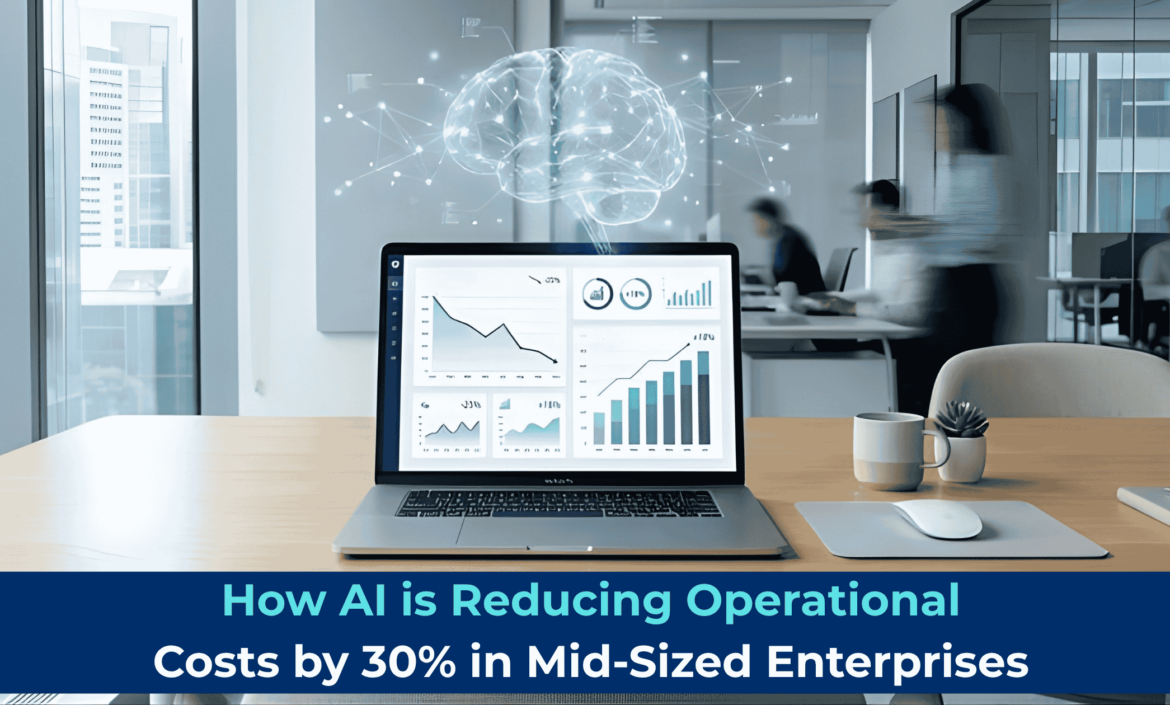
If you run a mid-sized business, you’ve likely experienced this—costs keep rising, but output doesn’t always keep up. Understanding how AI reduces operational costs is becoming essential as teams work hard, yet too much time is spent on manual tasks, follow-ups, and fixing avoidable mistakes.
Over time, these inefficiencies slow growth and reduce profitability.
This is exactly where businesses are now exploring smarter, AI-driven ways to improve efficiency at scale.
The Cost Problem Mid-Sized Businesses Can’t Ignore
Mid-sized enterprises face a unique challenge. You’re expected to scale like large organizations—but without the same resources.
Common cost challenges:
- Teams spend hours on repetitive tasks
- Processes are slower than necessary
- Errors lead to rework and financial loss
Hiring more staff increases costs, while cutting budgets impacts quality.
So what’s the smarter approach?
Understanding how AI reduces operational costs without sacrificing performance.
Why Traditional Cost-Cutting Methods No Longer Work
Most businesses still rely on outdated strategies like:
- Reducing headcount
- Limiting budgets
- Delaying investments
These may provide short-term relief but create long-term inefficiencies.
AI changes the game by optimizing operations instead of restricting them.
Where AI Reduces Operational Costs (Real Use Cases)
AI directly targets the biggest cost drivers in your business.
1. Automating Repetitive Processes
Teams spend nearly 40–60% of their time on routine work such as:
- Data entry
- Invoice processing
- Claims validation
- Report generation
AI automation completes these tasks faster and more accurately.
Impact:
- Reduces manual workload by up to 70%
- Cuts processing time from days to hours
- Lowers dependency on large teams
2. Improving Decision-Making with Real-Time Insights
Many cost leaks occur due to delayed or incomplete data.
AI-powered analytics helps:
- Identify inefficiencies instantly
- Predict demand trends
- Detect unusual spending patterns
Impact:
- Prevents unnecessary expenses
- Improves resource allocation
- Enables faster decisions
3. Reducing Customer Support Costs with AI Assistants
Customer support often faces high volumes of repetitive queries.
AI chatbots:
- Handle common questions instantly
- Provide 24/7 support
- Reduce workload on human teams
Impact:
- Cuts support costs
- Improves response time
- Increases customer satisfaction
4. Minimizing Errors Through Intelligent Monitoring
Manual workflows often result in:
- Data inconsistencies
- Compliance issues
- Costly rework
AI continuously monitors operations and flags issues early.
Impact:
- Reduces error-related costs
- Improves compliance
- Ensures consistency
5. Preventing Financial Loss with Fraud Detection
Fraud and irregular transactions can quietly drain revenue.
AI systems:
- Analyze patterns in real time
- Detect suspicious activity early
Impact:
- Prevents revenue leakage
- Strengthens risk management
- Protects brand reputation
What a 30% Cost Reduction Looks Like in Practice
Consider a mid-sized insurance firm struggling with slow claims processing.
Before AI:
- Processing time: 3–5 days
- High manual effort
- Frequent errors
- Rising operational costs
After AI Implementation:
- Processing time reduced to hours
- Manual workload significantly lowered
- Operational costs reduced by nearly 30%
This clearly demonstrates how AI reduces operational costs through targeted implementation.
Why Many AI Initiatives Fail
Not all AI projects succeed. Common mistakes include:
- Lack of clear business goals
- Poor tool selection
- Ignoring employee adoption
- Trying to automate everything at once
Best Practice:
Focus on high-impact areas first and scale gradually.
How Athena Global Technology Helps Reduce Costs with AI
Athena Global Technology helps mid-sized enterprises turn AI into measurable business outcomes.
Key Solutions:
1. Identifying High-Impact Opportunities
Analyze processes to find cost-heavy inefficiencies.
2. Intelligent Automation
Automate workflows to reduce manual effort and improve speed.
3. Data-Driven Decision Making
Implement analytics for real-time cost visibility.
4. AI-Powered Customer Experience
Deploy chatbots to reduce support costs.
5. Scalable & Secure Systems
Build solutions that grow with your business.
Getting Started with AI (Step-by-Step)
You don’t need a complete transformation overnight.
Start here:
- Identify high-cost processes
- Prioritize automation opportunities
- Use AI insights to remove inefficiencies
- Partner with experienced AI providers
Small changes can lead to massive savings.
Conclusion: AI is a Cost Advantage, Not Just a Trend
Businesses that understand how AI reduces operational costs gain a clear competitive edge.
With AI, you can:
- Improve efficiency
- Reduce unnecessary expenses
- Scale without increasing overhead
The question is no longer if AI can reduce costs—
it’s how fast you can implement it.
Frequently Asked Questions (AEO Optimized)
1. How does AI reduce operational costs?
AI reduces operational costs by automating repetitive tasks, improving efficiency, and enabling data-driven decisions that eliminate waste.
2. What are examples of AI reducing business costs?
Examples include chatbots for customer support, automated invoicing, predictive analytics, and fraud detection systems.
3. Can mid-sized businesses afford AI implementation?
Yes, many AI solutions are scalable and cost-effective, making them accessible for mid-sized enterprises.
4. How quickly can AI reduce operational costs?
Businesses can start seeing results within a few months, especially when focusing on high-impact areas.
5. What is the biggest benefit of AI in operations?
The biggest benefit is increased efficiency while reducing costs, allowing businesses to scale without increasing expenses.